


Luxury Intimates Made in Europe: Where to Shop Ethically
Last Updated: November 2, 2026
Quick Summary
Luxury intimates made in Europe are easiest to trust when the brand separates where a garment is designed, where its fabric is made, and where it is cut and sewn. Anekdot, designed in Berlin, uses 100% silk offcuts from Italy in its Dea Silk pieces and is rated Great by Good On You.
- A 'European' label can mean the design is European while sewing happens elsewhere.
- Ask brands in writing for the cutting and sewing country, fabric origin and factory ownership.
- The Dea Silk Bralette is made from 100% silk offcuts sourced from Italy and costs 95.00.
- Good On You rates Anekdot 'Great' on ethics and sustainability, a third-party view rather than a brand claim.
- Read each product page, since origin can differ between pieces from the same brand.
Table of Contents
- European Lingerie Brands Worth Knowing
- How to Verify Where Lingerie Is Made
- Dea Silk Bralette and Dea Silk Set: Italian Silk, Berlin Design
- Ether Soft Bra and Ether String Set: Vintage Detail at a Lower Price
- Sustainable Lingerie Brands and What Upcycling Means in Practice
- Choosing Your First Anekdot Piece
- Frequently Asked Questions
Luxury intimates made in Europe carry a promise that goes beyond the label. Anekdot is a Berlin-designed brand, and we have built our collection around one question: where and how a garment is made matters as much as how it feels against the skin. Shoppers who care about that question are often the same ones who want a shorter, clearer supply chain and fewer unknowns.
The European lingerie market is large and growing. Market Data Forecast estimates it at USD 16.91 billion in 2025 and USD 17.86 billion in 2026 (Europe lingerie market size and forecast). Other forecasts differ, with IMARC Group placing 2026 at USD 17.3 billion (Europe lingerie market size, share and forecast). These numbers cover the broader category, not specifically luxury pieces made in Europe, so treat them as a sense of scale rather than proof of production origin.
Origin matters for a practical reason. A "European" label can mean the designer is European while the sewing happens elsewhere. Our view is that buyers should be able to ask where a garment was cut and sewn, and get a straight answer.
Watch out: a brand's home city is not the same as its factory location. Check the production partner before assuming a garment was made close to the design studio.
European Lingerie Brands Worth Knowing
Plenty of European labels sell luxury intimates, but they differ in how much they disclose about production. The most useful way to compare them is not by design story but by production model: where the brand designs, where the fabric is made, and where the garment is finally cut and sewn. Those three locations are often different, and a brand that separates them clearly is easier to trust.
A practical country-by-country guide helps here.
Production models fall into three broad types. First, in-house atelier brands cut and sew in their own workshop, which usually means small batches and limited size runs. Second, partner-factory brands design in one country and produce with a named or unnamed factory in another, often Portugal or Eastern Europe. Third, design-studio brands develop in a European city and outsource both fabric and assembly, disclosing the least by default. A brand's model matters more than its home city: a Berlin or Paris address tells you where the design happens, not where the sewing happens.
When you compare brands, look at four things: whether the factory is named or at least located by country, whether materials such as silk or lace are sourced from a named region, whether the brand explains its size range and cup sizing, and whether it publishes care and fiber composition. Brands that answer these questions in plain language tend to be easier to trust, and they are the ones worth shortlisting before you look at price.
Our designs are developed in Berlin, and the Dea Silk pieces are made from 100% silk offcuts sourced from Italy. Ether pieces feature European lace and Earth pieces are made with a soft nylon base; where organic cotton linings are used, the product details note it.
Best for: shoppers who want a clear starting point, a country-by-country map of where production tends to happen, and are willing to read product details before buying.
How to Verify Where Lingerie Is Made
Start with the label, then go past it. Many garments show a country of manufacture, but the label can be the only detail provided. A more reliable check is to separate three questions that brands often blur: where the garment was designed, where the fabric was made, and where it was cut and sewn. A 'European' label can mean the designer is European while the sewing happens elsewhere, so ask for each answer separately.
Ask the brand directly, in writing if possible. A reputable brand should be able to tell you the country of cutting and sewing, the country of fabric origin, and whether the factory is owned or contracted. If the answer is vague, that is information too. A common pattern is that design-studio brands can name their fabric mill but not their sewing factory, or vice versa; note which part is missing.
Cross-check claims against independent sources. Good On You rates Anekdot 'Great' on its ethics and sustainability rating, which is a third-party view rather than our own claim (Good On You fashion brand ratings). Ratings like this are a starting point, not proof of origin, so pair them with the brand's own disclosures.
For a product-specific breakdown, read the product page line by line. On Anekdot's Dea Silk Bralette, for example, the silk is made from 100% silk offcuts sourced from Italy, and the design is developed in Berlin. Treat each product as its own origin story rather than assuming a brand-wide answer.
Sizing and fit deserve the same scrutiny. The Ether Soft Bra is unpadded and underwire-free, so read the product details before choosing.
Materials, care, and durability are the practical test of quality. Look for fiber composition, care instructions, and whether the brand explains expected longevity. Silk needs gentle care and can vary slightly between batches when made from offcuts; lace and tulle need different handling from jersey. A brand that states these details up front is easier to assess than one that leaves them to the wash label.
Finally, look for evidence behind ethical and environmental claims. Factory disclosure, material certifications, and named suppliers are concrete; general language about being conscious or transparent is not. If a claim cannot be traced to a named factory, a certification, or a specific material source, treat it as marketing until proven otherwise.
The article separates three questions a shopper should ask about any European-labelled garment.
| Question | What to ask | Why it matters |
|---|---|---|
| Where designed | Brand home or studio city | A city name says where design happens |
| Where fabric made | Named fabric mill or region | Materials can come from another country |
| Where cut and sewn | Factory location and ownership | 'European' label may still mean sewing elsewhere |
| Ethics claims | Named factory, certification or source | General language is treated as marketing |
Dea Silk Bralette and Dea Silk Set: Italian Silk, Berlin Design
The Dea Silk Bralette is made from 100% silk offcuts sourced from Italy. It has adjustable shoulder straps and a back closure with an adjustable fit. At 95.00 it is our entry point into the Dea range, and it works well as an everyday piece under light clothing.
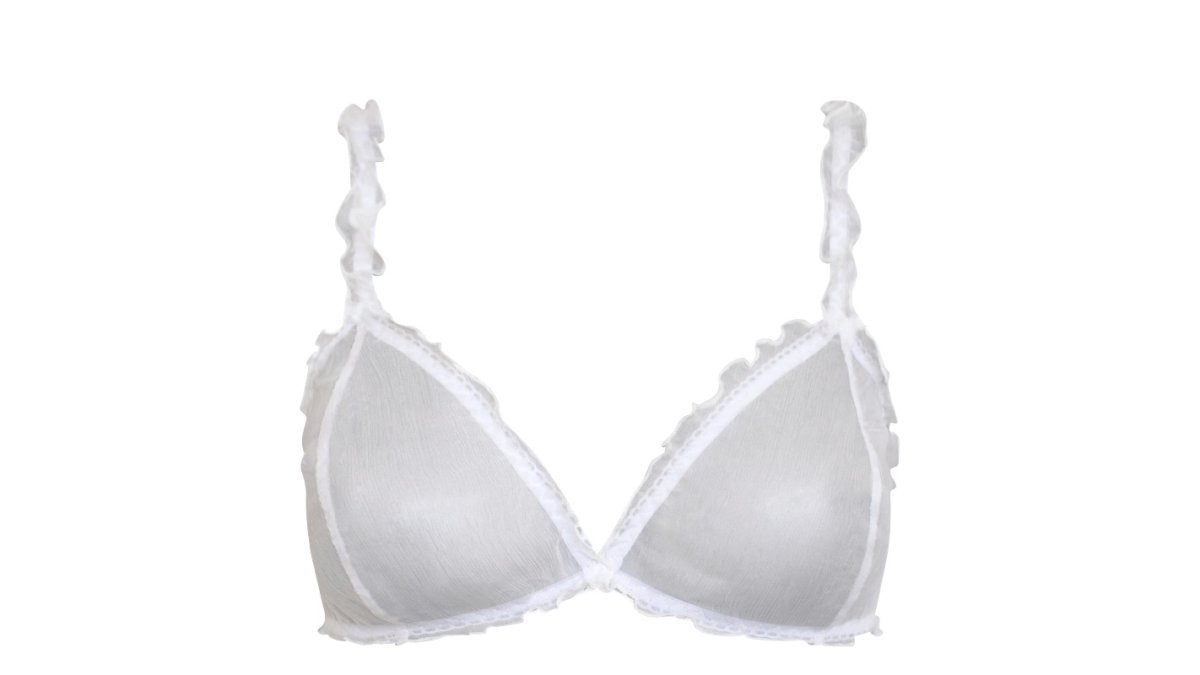
If you want a complete look, the Dea Silk Set pairs a soft bralette with matching briefs that sit high at the waist or lower on the hip. The set is priced at 150.00.

Read the product description before buying.
- View the Dea Silk Bralette for the full product details and price.
- Shop the Dea Silk Set if you want the matching bralette and briefs together.
Ether Soft Bra and Ether String Set: Vintage Detail at a Lower Price
The Ether Soft Bra is an unpadded, underwire-free bra with silver rings on the straps and a vintage-inspired front hook closure. The decorative lace gives the modern shape a softer, more romantic finish. It is priced at 89.00, which makes it one of the more accessible ways to try Anekdot's detailing.

For a coordinated option, the Ether String Set combines the same soft bra with a string-style brief designed to sit discreetly under clothing. At 135.00, it costs more than the bra alone, so it is worth choosing it only if you want the matching piece.
The Ether pieces suit everyday wear.
- Explore the Ether Soft Bra to see the fit and detailing up close.
- See the Ether String Set for the full coordinated option.
Sustainable Lingerie Brands and What Upcycling Means in Practice
Upcycling means turning material that would otherwise be wasted into new products. For intimates, this usually means fabric offcuts or surplus stock rather than new raw material. The benefit is less waste; the limitation is that colours and quantities depend on what is available, so pieces are often limited.

Anekdot builds its collection from fashion-industry deadstock and off-cuts, and pieces are offered as limited editions.
Sustainability claims should be specific. Ask what is reused, what is new, and how the production is organised. A brand that can answer those questions in detail is usually more reliable than one that relies on general language about being eco-friendly.
Choosing Your First Anekdot Piece
Start with the piece that fits your daily routine. The Dea Silk Panties, priced at 55.00, are a low-commitment way to try the silk. The Earth Black Soft Bra v2 at 89.00 is a versatile everyday option.
If you are buying for someone else, a gift card is an easy choice. The gift card lets the recipient pick their own piece.
Whatever you choose, read the product page, check the size guide, and buy the piece that you expect to wear often. Luxury intimates made in Europe are an investment, and the best choice is one that will still feel right after many washes.
Frequently Asked Questions
Which luxury lingerie brands make their products in Europe?
Several European brands produce intimates locally, but origin varies by piece, so check each product page rather than relying on a brand's overall reputation. Anekdot designs its collection in Berlin and manufactures in a woman-owned factory in Poland, . Its product pages list materials such as 100% silk offcuts from Italy, and the brand is rated 'Great' by Good On You. Ask any brand for the factory location of the specific piece you are considering.
How can I verify where a lingerie brand manufactures its products?
Start with the care label and product description, which should name the country of manufacture or the facility. Then check whether the brand discloses its factory partners, not only where it is headquartered. A European brand label alone does not guarantee European production, since some brands design in one country and manufacture elsewhere. Direct questions to the brand about specific garments and ask for documentation if the claim matters to you.
Are European-made intimates more sustainable?
Not automatically. Shorter supply chains can reduce transport emissions, but sustainability depends on materials, production volumes and waste. Upcycled deadstock and surplus fabrics reduce demand for new raw materials, which is a different benefit from origin. Anekdot uses upcycled materials from fashion industry deadstock and off-cuts, and its Dea Silk pieces use silk surplus from Italy. Judge the claim by the materials and process, not by the location alone.
What should I look for when buying European-made lingerie?
Look for specific details: the factory or atelier, the materials and their origin, and whether the garment is produced in limited runs. Check fabric content on each product page. Compare prices across similar styles, for example the Ether Soft Bra at 89.00 against the Dea Silk Bralette at 95.00. Check the sizing guidance before buying, as fit varies between cuts.
