


7 Reasons Organic Cotton Lace Bralettes Earn Their Place
Quick Summary
Organic cotton lace bralettes offer soft, breathable everyday support without the stiffness of underwire. Choose one by checking which certification backs the organic claim, whether it covers the lace and elastic, and whether the band fits from the brand's size chart.
- Organic cotton is grown without synthetic pesticides or fertilizers, which many people prefer.
- GOTS covers the whole processing chain and applies to the finished garment, a stronger signal than OCS.
- Check whether certification covers the lace, elastic and lining, not just the main fabric.
- Size the band from the brand's size chart rather than your usual bra size.
- Wear a new bralette for an hour at home before committing to a full day.
Table of Contents
- Why Organic Cotton Lace Bralettes Are Worth Buying
- Is Organic Cotton Better for Skin?
- How to Check Organic and Upcycled Claims
- Finding the Right Fit Across Body Types
- Wireless Organic Cotton Bras for Everyday Support
- How to Wash Lace Bralettes So They Last
- Choose Your First Organic Cotton Lace Bralette at Anekdot
- Frequently Asked Questions
Why Organic Cotton Lace Bralettes Are Worth Buying
Last Updated: November 1, 2026
Organic cotton lace bralettes give you soft, breathable everyday support without the stiffness of underwire. At Anekdot, we design our bralettes in Berlin, and the collection uses European lace and organic cotton, so you get a piece that feels good against your skin and looks considered in your wardrobe. If you're ready to buy organic cotton lace bralettes, the sections below explain what to look for before you choose.
Most shoppers focus on style first. That makes sense, but the fabric and construction determine how a bralette feels after eight hours. Here's where it gets practical.
The Viana Verde Longline Bralette is a good example of the category. It's made from a delicate sage green lace with floral details, unpadded and wire-free, so it follows your natural shape. At €95, it's a considered purchase, which is exactly why you should understand the materials first.

Is Organic Cotton Better for Skin?
Organic cotton is grown without synthetic pesticides or fertilizers, which many people prefer. That's the core benefit. Whether it's better for your skin specifically depends on your own reactions, so test a new piece against your usual routine before wearing it all day.
A common mistake is assuming "natural" means "irritation-free." Lace trims and elastane can still cause friction or rubbing, even when the main fabric is organic cotton. Check the trim and the band, not just the label.
How to Check Organic and Upcycled Claims
Most listings say "organic cotton" and stop there. The useful question is not whether a brand uses the word organic, but which certification backs it and what that certification actually covers. Here is how to read the labels you will see on organic cotton lace bralettes.
Start with the fiber certification, not the brand story. The two labels most commonly cited for cotton are GOTS (Global Organic Textile Standard) and OCS (Organic Content Standard). They are not equivalent:
- GOTS covers the whole processing chain, including social and environmental criteria at each stage, and sets thresholds for the finished product. A GOTS claim on a bralette is a stronger signal because it applies to the garment, not just the raw cotton.
- OCS verifies the organic content of the fiber and tracks it through the supply chain, but it does not set the same processing or social criteria. An OCS label tells you the cotton content is organic; it does not tell you how the lace was finished or dyed.
A common pattern is a brand citing "organic cotton" in the product copy while the certification, if any, applies only to the main fabric, not the lace trim, the elastic, or the thread. Ask which components are covered.
Then check the lace separately. Look for a fiber breakdown by component: main fabric, lace, lining, and elastic. A brand that publishes that breakdown is giving you something you can verify.
Upcycled and reclaimed lace needs the same scrutiny. "Upcycled" can mean deadstock fabric, reclaimed vintage lace, or offcuts from another production run. Each has different implications for durability and for how much you can rely on fiber-content claims. Ask the brand what the lace was before it was upcycled and whether it has been tested for stretch recovery.
What labels do not guarantee. A certification does not guarantee the bralette will fit, feel soft against your skin, or last through repeated washing. It also does not guarantee the lace will not snag. Treat certification as one input, a check on fiber origin and processing, and pair it with the fit and care guidance below.
GOTS certified organic textile standard overview
Verify the certification and its scope, ask for a per-component fiber breakdown, and separate the organic-cotton claim from the lace and elastic content. A brand that answers those questions clearly is giving you more than a slogan.
The certification behind an organic claim matters more than the brand story, so compare what each label actually covers:
| Label | What it covers | What it does not guarantee |
|---|---|---|
| GOTS | Whole processing chain, social and environmental criteria, finished product | Fit, softness, or washing durability |
| OCS | Organic content of the fiber, tracked through supply | Processing or social criteria for lace or dye |
| Brand claim with no certificate | Unverified until scope is confirmed | Any component coverage |
Finding the Right Fit Across Body Types
Bralette sizing varies more than most shoppers expect, and lace bralettes are less forgiving of a poor band fit than molded-cup bras because there is no foam to hide gaps or digging. Work through band, cup, coverage, and adjustability in that order.
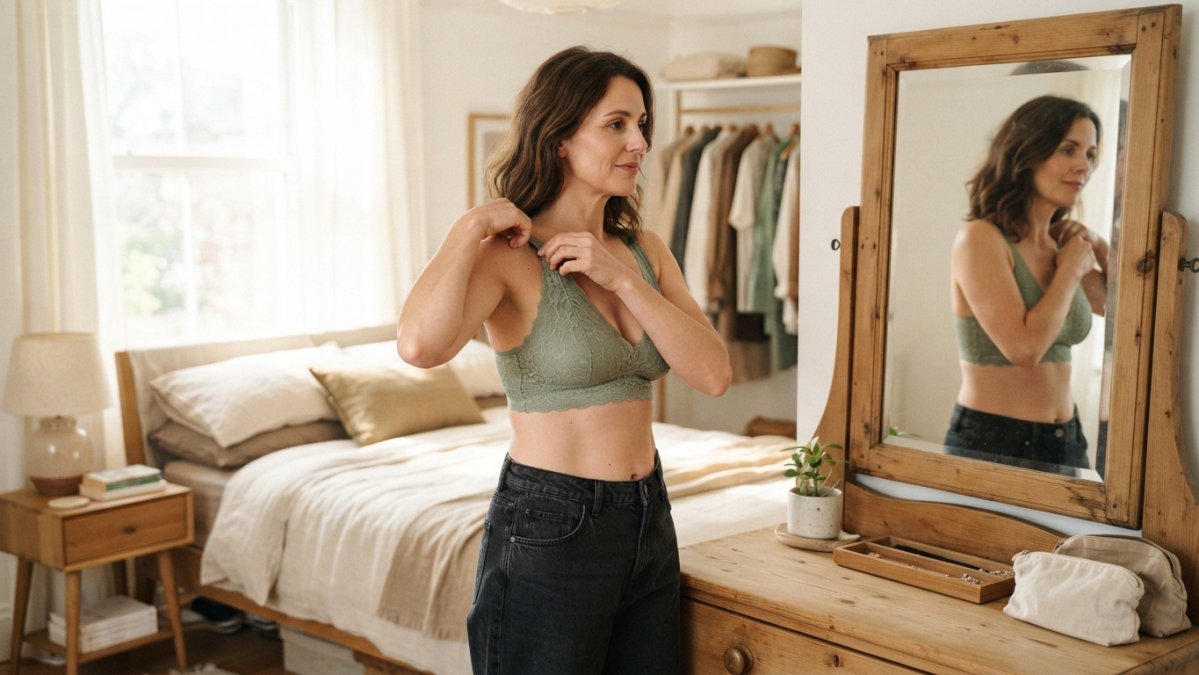
1. Fit the band first. Measure snugly around your ribcage, directly under the bust, and compare that number to the brand's size chart rather than your usual bra size. Bralettes are often sized S-XL rather than by band and cup, so the chart is the only reliable guide. A band that rides up at the back is too loose; one that leaves red marks after an hour is too tight. Longline styles sit lower on the ribcage, so check the length measurement as well as the band range.
Viana Verde Longline Bralette →
2. Match cup coverage to your shape. Lace bralettes generally fall into three coverage types:
- Triangle cups suit smaller busts and shallow shapes, and give the least coverage at the center. They work well under open necklines but offer minimal separation.
- Scoop or soft-cup styles cover more of the bust and suit a wider range of cup sizes, including fuller busts that want light support without compression.
- Longline and high-apex styles add a wider underband and more side coverage, which helps if you want a smoother line under clothing or more security during movement.
If you are between cup sizes, size for the band and accept slightly more or less coverage at the center, the band is what determines whether the bralette stays in place.
3. Check the underband and side seams. A wide, elasticized underband distributes pressure better than a narrow one and is the single biggest factor in all-day comfort. Look at the side seams: on fuller busts, a bralette with a higher side seam and a deeper underband reduces the chance of spillover. Unpadded, wire-free styles follow your natural shape, so the underband does the supporting work.
4. Use straps and closures to fine-tune. Adjustable straps let you shorten the front rise or lengthen it for a lower neckline. Racerback designs give a more secure feel during movement because the straps sit closer to the center of the back. Hook-and-eye closures allow small band adjustments through the day; pull-on styles do not, so size them slightly more generously if you are between sizes.
5. Test before you commit to a full day. Wear a new bralette for an hour at home before wearing it out. Check for digging at the underband, gaping at the cup edge, and strap slippage. Lace has limited stretch recovery compared with knit fabric, so a bralette that feels tight when new is unlikely to relax into comfort.
!Woman in her forties trying on a sage green lace bralette in a bright bedroom, adjusting the straps in a mirror
Fit the band from the size chart, choose coverage by cup shape, prioritize a wide elasticized underband, and use adjustable straps and closures to fine-tune. Test for an hour before committing to a full day.
Wireless Organic Cotton Bras for Everyday Support
Wireless bras offer light support for everyday wear. Light support works best for daily wear and gentle activity, not high-impact exercise.
Choose a band with some stretch and a wide underband if you want comfort through a full day. Elasticized edges and adjustable straps help you fine-tune the fit.
How to Wash Lace Bralettes So They Last
Wash lace bralettes by hand or on a gentle cycle inside a mesh bag. Use cool water and a mild detergent, and never wring them out. Lay them flat to dry, away from direct heat.
Lace snags easily, so avoid rough surfaces and keep hooks or zippers away from delicate trim. Following these steps protects the fabric and the elastic, which is where most bralettes lose their shape first.
Choose Your First Organic Cotton Lace Bralette at Anekdot
If you're buying your first piece, start with an everyday silhouette you can wear often. Browse the Navy Lin Bowback for another natural-fiber option you can wear daily. If you'd rather let someone else choose, a Gift Card lets them pick their own piece.
Frequently Asked Questions
Are organic cotton bralettes better for sensitive skin?
Organic cotton is grown without synthetic pesticides and fertilizers, which many people prefer, since it avoids those residues on the fibre. It is still a fabric, though, and skin reactions can come from dyes, finishes or elastane blends rather than cotton itself. Check the composition label, wear a new piece for a few hours before a full day, and look for a brand that states its fabric sources clearly. If you react easily, a simple patch test on the band is the most reliable way to find out how a specific bralette will feel.
What should I look for when buying an organic cotton lace bralette?
Start with the composition: the percentage of organic cotton, the lace fibre and the amount of stretch. Next, check the construction, including whether the cups are unpadded and wire-free, how the band sits and whether the straps adjust. Lace should feel soft against the skin rather than scratchy at the edges. Finally, confirm the sizing guidance and the care instructions, since they tell you how the piece will hold its shape over time.
How do you wash a lace bralette without damaging it?
Hand wash in lukewarm water with a mild, pH-neutral detergent, and avoid soaking for long periods. Gently squeeze rather than twisting, and never wring the lace. Fasten the hooks and place the bralette in a mesh bag if you use a machine, on a gentle cycle. Lay it flat on a towel to dry, away from direct heat, which keeps the elastic band and lace edges from stretching out of shape.
Can organic cotton lace bralettes be worn every day?
Yes, for most people. Unpadded, wire-free bralettes with a soft band are designed for regular wear, and the lightweight cotton and lace keep the fabric breathable through the day. They offer light support rather than structured lift, so if you need firmer support for exercise or long hours, choose a style with a wider underbust band. Rotating two or three pieces lets each one recover between wears and extends their life.
Anekdot's collection combines European lace, organic cotton and upcycled materials in pieces designed to last. Explore the Viana Longline Bralette or browse the Aurora Silk Bralette to find your fit.
