


Is Organic Cotton Better for Skin? What the Evidence Actually Shows
Last Updated: October 23, 2026
Quick Summary
Organic cotton better for skin depends on processing, not farming method alone. What matters most is how the cotton is dyed, finished, and constructed after harvest, since harsh chemical treatments can be applied to either organic or conventional cotton.
- Organic certification verifies farming practices only, not finished fabric quality or safety for sensitive skin.
- Chemical residues from dyes, bleaching, and finishes cause most skin irritation, regardless of whether cotton is organic.
- GOTS and OEKO-TEX Standard 100 certifications address finished-product safety; basic organic labels do not.
- Garment construction, seams, tags, and weave matter more for skin comfort than fiber origin.
- Wash new garments 2-3 times before wearing against sensitive skin to remove manufacturing residues and excess dye.
Table of Contents
- Is Organic Cotton Better for Skin? The Real Evidence
- Organic Cotton vs Regular Cotton: What Actually Differs
- Cotton Clothing for Eczema and Sensitive Skin
- Best Fabric for Sensitive Skin: What to Actually Look For
- How to Wash Organic Cotton Clothes to Protect Your Skin
- Certification and Label Verification: Cutting Through Greenwashing
- When Organic Cotton Matters, and When It Doesn't
- Frequently Asked Questions
Is Organic Cotton Better for Skin? The Real Evidence
The claim that organic cotton is automatically softer and organic cotton better for skin is everywhere. According to The New York Times Wirecutter, the belief that organic cotton produces softer, higher-quality fabrics is actually a myth.
At Anekdot, we work with organic cotton in our sustainable lingerie collections for transparent sourcing and thoughtful material choices. But labeling something "organic" doesn't make it hypoallergenic or irritation-free.
This guide breaks down what the research shows, where marketing overstates the benefits, and how to find fabrics that work for your skin.
Organic Cotton vs Regular Cotton: What Actually Differs
The fundamental difference between organic and conventional cotton lies in how it's grown, not the finished fabric. Organic cotton is produced without synthetic pesticides or fertilizers under certification standards; conventional cotton relies on chemical inputs.
Once both types reach the textile mill, the distinction blurs. The same dyes, finishes, and chemical treatments can be applied to either, so a heavily processed organic cotton shirt may contain more chemical residues than a minimally processed conventional one.
How farming practices affect the finished fabric
Organic farming does reduce pesticide exposure during cultivation. Research from PubMed Central's biodegradability study found that 100% pure organic cotton can biodegrade more quickly under suitable conditions, while conventional cotton treated with heavy chemical finishes may not.
The real skin benefit comes from what happens next: bleaching, dyeing, and finishing determine whether irritating residues remain. A brand using organic cotton with harsh synthetic dyes hasn't solved the sensitivity problem, while a conventional garment finished with low-impact dyes and minimal processing may be gentler.
The gap between certification and garment quality
This is where greenwashing thrives. According to EcoCult's analysis of organic clothing and skin reactions, certified organic cotton clothing has been associated with skin reactions and rashes in people with sensitive skin.
You're buying a promise about one stage of production, not a guarantee of low-impact dyes or minimal finishes. Reading the label matters more than the organic seal alone.
Cotton Clothing for Eczema and Sensitive Skin
For people with eczema or reactive skin, cotton, organic or conventional, can work if processed and constructed carefully.
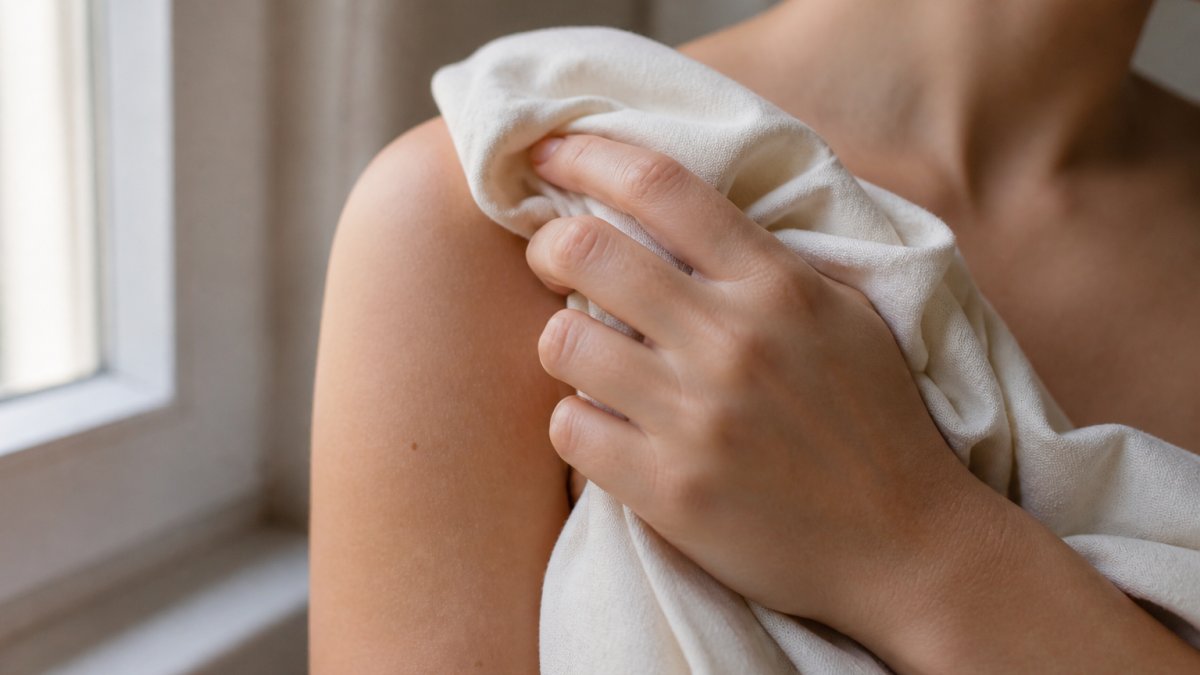
But cotton alone doesn't guarantee comfort, and organic cotton is not a treatment for eczema. It's a fiber choice, not a medical intervention.
What the evidence does and does not show
Textile and dermatology literature consistently shows fiber origin is rarely the deciding factor for skin reactions. The more consistent irritants are what remains in the finished fabric: dye residues, formaldehyde-based finishes, optical brighteners, softening agents, and detergent residue.
That doesn't make organic cotton irrelevant. Reduced pesticide exposure during farming is a real environmental and occupational benefit. But claims that organic cotton is inherently hypoallergenic or prevents eczema flares go beyond the evidence; treat them as marketing until processing and certifications back them up.
Garment-level factors that matter more than the organic label
When choosing cotton clothing for reactive skin, evaluate the finished garment, not just the fiber:
- Seams and construction: Flatlock or covered seams reduce friction. Rough overlocked seams and stiff tags at the neck or waistband are common mechanical irritants.
- Tags and labels: Cut-out or printed labels are gentler than scratchy woven tags, especially for children and for anyone with atopic skin.
- Dye and finish: Fiber-reactive or low-impact dyes and minimal finishing are generally gentler than heavy wrinkle-resistant or water-repellent treatments.
A practical test-and-track approach
If you have reactive skin, treat new garments as a small experiment. Wash new items two to three times before wearing against sensitive areas, introduce one at a time, and note reactions alongside what you wore, how it was washed, and how long it was worn. This separates fiber reactions from finish, dye, detergent, or fit issues.
Best Fabric for Sensitive Skin: What to Actually Look For
Rather than relying on a single label, evaluate these factors:
Fiber content and weave: Look for 100% cotton with a smooth, tight weave. Jersey knit and percale are softer and less irritating than looser weaves. Avoid raised textures or napping, which trap irritants.
Dye type: Low-impact or fiber-reactive dyes are gentler than standard synthetic dyes. Some brands specify this; others don't.
Finishing processes: Request information about bleaching, softening agents, and water-repellent or wrinkle-resistant treatments. Brands committed to sensitive skin typically minimize these steps or use gentler alternatives.
Certifications beyond organic: Look for GOTS (Global Organic Textile Standard), OEKO-TEX, or similar certifications that verify low chemical residues in the finished product, not just the raw fiber.
Chemical residues and textile processing
Most skin irritation from cotton clothing comes from processing chemicals, not the cotton itself. Standard finishing involves chlorine bleaching, synthetic dyes, formaldehyde-based wrinkle resisters, optical brighteners, and synthetic softeners. Organic cotton doesn't exempt a garment from these processes, so a conventional garment with low-impact finishing may be the better choice for reactive skin.
Softness, breathability, and comfort factors
Softness comes from fiber fineness, yarn twist, and finishing techniques, not organic certification. High-quality conventional cotton can be softer than poorly finished organic cotton.
Breathability depends on weave density and fiber diameter. Cotton naturally breathes well, but a tightly woven organic cotton fabric breathes less effectively than a looser-weave conventional cotton. For eczema and heat-sensitive skin, weave matters more than organic status.
How to Wash Organic Cotton Clothes to Protect Your Skin
Once you've found a garment that works, care determines whether it stays gentle.
Use gentle detergent: Choose fragrance-free, dye-free detergents without enzymes or optical brighteners; sensitive-skin or baby brands are usually safe.
Skip the dryer when possible: Heat damages fibers and concentrates residues. Air-dry organic cotton lingerie and delicates.
Avoid bleach and brighteners: These are harsh on sensitive skin and damage cotton fibers over time.
Proper care extends garment life and reduces irritation risk.
Certification and Label Verification: Cutting Through Greenwashing
Not all organic certifications are equal. Understanding what each verifies helps you avoid greenwashing and make a useful skin-comfort decision.
What each label actually verifies
- GOTS (Global Organic Textile Standard): The most rigorous for combined fiber and processing. It certifies organic fiber content and sets limits on chemical inputs in processing, including restrictions on dyes, finishes, and residues. If a product carries GOTS, you are getting both organic farming claims and processing controls, though it is still not a medical guarantee for reactive skin.
- Organic fiber seals (USDA Organic, EU organic logo, and similar): These certify the raw fiber or agricultural ingredient. They do not, on their own, verify low-chemical finishing of the finished garment. A garment can carry an organic fiber seal and still be heavily processed.
- OEKO-TEX (notably Standard 100): Focuses on finished-product safety by testing for harmful substances against defined limits. It does not require organic fiber, so a conventional cotton garment can carry OEKO-TEX Standard 100. For skin-comfort purposes, this is often the more directly relevant certification because it addresses what remains in the finished textile.
How to read a label in practice
A useful sequence when evaluating a garment for sensitive skin:
- Check the fiber claim. Look for a specific certification name and a license or certification number, not just the word 'organic' or 'natural.' Vague terms like 'natural cotton' or 'eco cotton' are not regulated in the same way and should not be treated as equivalent to certified organic.
- Check for a processing or finished-product certification. GOTS or OEKO-TEX Standard 100 are the most common signals that processing and residues have been addressed. If neither appears, ask the brand directly about dyes, bleaching, and finishes.
- Check the garment construction. Seams, tags, trims, and fit affect skin comfort independently of fiber origin. A certified fabric can still be assembled into an irritating garment.
- Check the care instructions. Washing guidance and dye-fastness claims tell you how the garment is expected to behave against skin over time.
What certifications do not verify
No textile certification verifies a garment will be comfortable for every individual. Certifications set limits and verify processes; they don't test your personal skin response.
When shopping, prioritize specific, verifiable certifications such as GOTS or OEKO-TEX Standard 100 over generic 'organic' or 'natural' claims. If a brand doesn't list certifications, ask directly about fiber source, dye type, and finishing processes.
Different textile certifications verify different aspects of production, and understanding what each covers helps you choose fabrics suited to sensitive skin.
| Certification | What It Verifies | Relevance for Sensitive Skin |
|---|---|---|
| GOTS | Organic fiber and chemical limits in processing | Addresses both fiber source and finished-product safety |
| USDA Organic, EU organic logo | Raw fiber or agricultural ingredient only | Does not verify finished garment processing |
| OEKO-TEX Standard 100 | Finished product tested for harmful substances | Directly relevant; works with conventional or organic fiber |
| Fair Trade | Labor and economic practices | Does not address chemical residues or skin safety |
When Organic Cotton Matters, and When It Doesn't
Organic cotton makes sense if you prioritize environmental impact and reduced pesticide exposure, will pay a premium for certified transparent sourcing, care about biodegradability, and want to support ethical supply chains.
The honest answer: organic cotton is one factor among many.
For lingerie and intimate apparel, where fabric touches sensitive skin, processing and finishing matter as much as fiber source.
The evidence doesn't support the simple claim that organic cotton is automatically better for skin.
Frequently Asked Questions
Is organic cotton better for sensitive skin than conventional cotton?
Organic cotton farming avoids synthetic pesticides and some chemical residues, which can theoretically reduce irritant exposure. However, organic certification describes farming practices, not the finished fabric. Both organic and conventional cotton can cause skin irritation if the garment retains chemical residues from processing, dyes, or finishes. The real difference depends on how thoroughly the fabric is processed and washed before wear. For sensitive skin, inspect the garment's care instructions and wash it before first use to remove finishing chemicals.
Can organic cotton help with eczema or allergies?
Organic cotton may reduce exposure to certain synthetic pesticides used in conventional farming, but eczema and allergic reactions are triggered by multiple factors: remaining chemical residues in the fabric, dyes, elastic, or seams. A garment labeled organic is not automatically hypoallergenic. People with eczema should prioritize garments with minimal processing, dye-free or naturally dyed options, and soft seams. Always wash new garments before wearing, and patch-test if you have severe sensitivity. Consult a dermatologist if reactions persist.
What should I look for in cotton clothing if I have sensitive skin?
Look beyond the organic label. Check for: minimal processing and finishing chemicals (ask brands for transparency), natural or low-impact dyes, soft flat seams or tagless construction, and a simple care label suggesting gentle washing. Wash all new garments in mild detergent before wearing to remove residual chemicals and dyes. Choose tightly woven, breathable fabrics that allow air circulation and moisture management. Certified organic is a plus, but a well-processed conventional cotton garment may feel better against sensitive skin than poorly finished organic cotton.
How do I wash organic cotton clothes to keep them soft and protect my skin?
Wash in cold water with mild, fragrance-free detergent to prevent chemical buildup and preserve softness. Use a gentle or delicate cycle. Avoid fabric softeners and bleach, which can leave residues that irritate sensitive skin. Dry on low heat or air-dry to prevent fiber damage. Wash new garments separately before first wear to remove sizing and finishing agents. Regular, gentle care maintains both the fabric's integrity and its skin-friendliness over time.
