


Benefits of Slow Fashion Intimates for Everyday Wear
Last Updated: November 5, 2026
Quick Summary
Slow fashion intimates means buying fewer, better-made lingerie pieces and wearing them for longer instead of chasing trends. Underwear is worn against the skin and washed often, so fit, fabric, and careful washing matter most for making it last.
- Choose pieces that fit well now, since poor fit causes strain, chafing, and faster wear.
- Judge lingerie by elastic type, seam finishing, and strap hardware, which predict longevity better than marketing.
- Compare cost per wear, meaning the price divided by how many times you wear the item before it wears out.
- Wash lingerie by hand or on a cold delicate cycle, and skip the dryer to protect elastic.
- Repair straps and hooks early, and keep a small repair kit to extend each piece's life.
Table of Contents
- What Slow Fashion Means for Lingerie
- Why Fit and Comfort Matter More Than Trends
- The Material and Construction Case for Slow Lingerie
- Cost Per Wear: Why the Higher Upfront Price Can Work Out
- Caring for Lingerie So It Lasts
- Honest Limits: Where Slow Fashion Claims Fall Short
- Building a Smaller Lingerie Wardrobe You Will Keep Wearing
- Frequently Asked Questions
What Slow Fashion Means for Lingerie
Slow fashion intimates means buying fewer, better-made pieces and wearing them for longer. For lingerie, that idea carries extra weight, because underwear sits against the skin all day and is washed far more often than outerwear. Anekdot builds its collection around this principle, using recycled nylon and European lace in pieces meant to stay in rotation for years rather than a single season.
The term is often set against fast fashion, where trend cycles push shoppers to replace cheap, short-lived items constantly. Slow fashion asks a different question: not "what's new?" but "what will still work for me next year?" That shift in thinking shapes everything else from fit to cost to care.
Why Fit and Comfort Matter More Than Trends
Lingerie that fits well does more than look good. It reduces strain, prevents chafing, and keeps its shape longer, which is one of the simplest ways to make a piece last.
Many women keep wearing underwear that no longer fits because they assume the discomfort is normal. It usually isn't. A bra with a band that rides up or straps that dig in is telling you it's the wrong size or style. Soft, wireless pieces like the Lotus White Soft Bra are one option for everyday wear.

Fit also changes with age and body shifts. A slow approach means revisiting your sizing every so often rather than buying on autopilot.
The Material and Construction Case for Slow Lingerie
Fabric and stitching decide how a piece wears, how it feels against skin, and how long it stays in rotation. Intimates are a special case because they combine close-to-skin fibers with elastic, and those two components age at different rates. Understanding the trade-offs helps you judge a garment before you buy it.
Common fibers and what they do. Cotton is breathable and easy to wash but loses shape in thin knits and dries slowly. Recycled nylon, used across many Anekdot styles, reduces demand for new petroleum feedstock while keeping the durability that makes a piece last.
Blends are the norm, and that matters. Most lingerie is a blend because no single fiber does everything: a cotton-modal jersey feels soft and breathes, a nylon-elastane lace stretches and recovers, a silk-elastane satin drapes without sagging. The catch is that blends are harder to recycle at end of life, so a durable blend that lasts years can still be a disposal problem later. There is no perfect fiber, only trade-offs between comfort, longevity, breathability, and end-of-life.
Elastic is the hidden lifespan limit. Even excellent fabric fails when the elastic goes. Fold-over elastic, encased elastic, and plush-backed straps all stretch differently; narrow exposed elastic tends to lose recovery first, especially after hot washes and dryer cycles. Check how the elastic is attached and whether it is covered, because a covered elastic channel protects the rubber and usually outlasts a bare edge.
Dyes and finishes. Dark saturated dyes can bleed in the first washes, and some reactive dyes need more water to set.
Construction details that predict longevity. Look at seam finishing (flatlock and clean-finished seams reduce chafing and fraying), strap adjusters (metal hardware usually outlasts thin plastic), hook-and-eye quality, and whether lace edges are scalloped and finished or raw and prone to running. Seamless edges, as found on the Anekdot Lotus White Cheeky Panties, give a smooth finish and comfortable fit. For a more elaborate construction, the Earth Black Triangle Bra shows how lace and adjustable straps can combine in one piece.


Breathability and skin sensitivity. If you have known sensitivities, check the product details before buying.
It's worth checking the care label, the seam finishing, and the elastic before buying. These details predict longevity far better than marketing language does.
Cost Per Wear: Why the Higher Upfront Price Can Work Out
Slow lingerie often costs more at the checkout. A bra at 89.00 or a set at 130.00 is priced above multi-packs of cheaper alternatives. The useful comparison is cost per wear: the price divided by how many times you actually wear the item before it's worn out.
The math only works if the piece lasts, so it's worth buying fewer items and looking after them.
Price can be a barrier for some shoppers. Buying a few core pieces rather than a full drawer can make the budget more manageable.
Slow lingerie often costs more at checkout, so the useful comparison is cost per wear, which the article illustrates with these price points.
| Item | Price | Note |
|---|---|---|
| Bra | 89.00 | Priced above multi-packs of cheaper alternatives |
| Lingerie set | 130.00 | Priced above multi-packs of cheaper alternatives |
| Cost per wear | Price ÷ wears | Only works if the piece actually lasts |
Caring for Lingerie So It Lasts
Most lingerie wears out from heat, friction, and chemical damage, not from wearing it. Because intimates are washed far more often than outerwear and rely on elastic, care is where longevity is won or lost. The goal is to slow three things: elastic fatigue, fiber breakdown, and hardware corrosion.
Washing. Hand washing in cool water with a mild, low-residue soap is gentler than a hot machine cycle. If you machine wash, use a mesh lingerie bag, a delicate cycle, and cold water, and fasten hooks and clasps first so they don't snag lace or other items. Avoid fabric softener and harsh detergents, which leave residue on elastic and reduce absorbency in cotton gussets. Wash soon after wear rather than letting items sit, and separate lights from darks to limit dye transfer.
Drying and storage. Skip the dryer; heat strips elastic over time and tumbles hardware against delicate fabric. Lay pieces flat to dry, away from direct sun, and reshape cups while damp. Store bras flat or folded with cups nested rather than squashed into a drawer, and avoid hanging by straps, which stretches them. Rotate your pieces so no single item takes all the wear.
Stains and odor. Treat stains promptly with cool water and a mild soap; hot water can set protein stains. For odor in synthetic pieces, a soak in cool water with a little white vinegar can help, then wash as usual. Watch out: bleach and oxygen boosters can weaken elastic and fade lace, so test on an inconspicuous area first.
Repair before replacement. Many failures are fixable. A stretched or snapped strap can often be replaced or shortened; a loose hook-and-eye can be re-stitched; a small lace pull can be knotted and trimmed rather than left to run. Keep a small repair kit (needle, matching thread, spare hooks, a few strap sliders) and check pieces each season.
Reuse and end of life. When a bra no longer supports, it can still serve for low-impact wear or be donated where programs accept intimates. Buying fewer, longer-lasting pieces in the first place is one practical approach to reducing waste.
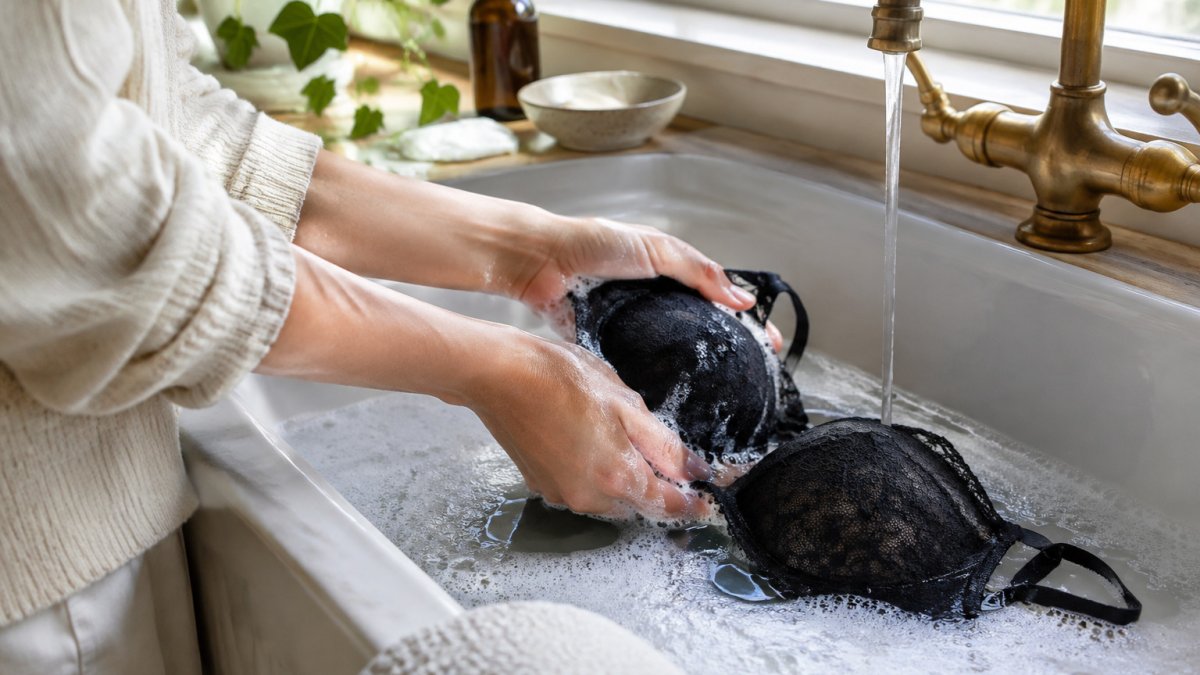
Small habits add up. A piece washed carefully and repaired when needed can stay in rotation for years, which is the practical core of slow fashion intimates.
Honest Limits: Where Slow Fashion Claims Fall Short
Slow fashion has real strengths, but it doesn't solve everything. Sustainability claims are easy to make and hard to verify. Recycled materials reduce demand for new resources, but they still need energy and water to process. A label saying "sustainable" tells you the intent, not the full impact.
And a higher price doesn't automatically mean better quality or ethics.
Comfort is personal, and sensitive skin reacts differently to different fabrics. If you have a known sensitivity, check the product details before relying on a piece.
Building a Smaller Lingerie Wardrobe You Will Keep Wearing
A slow wardrobe starts small. Pick a few foundation pieces, such as the Lotus White Set, that pair with much of what you own. A second everyday bra, like the Earth Black Soft Bra v2, is another option for variety.
Before buying, ask three questions: Will I wear this at least once a week? Does it fit now, not in a hypothetical future? Can I care for it properly? If the answer to any is no, skip it. Browsing the full lingerie sets collection can help you see how pieces combine before committing.
Fewer, better pieces, worn well and washed gently, is the core of the slow approach.
Frequently Asked Questions
What are the advantages of slow fashion?
Slow fashion focuses on fewer, better-made garments that are meant to be worn for years. The brand's commitment to upcycled deadstock and European lace reflects this approach. For lingerie, the practical advantages are better fit retention, fewer replacements and a wardrobe where every piece is chosen rather than impulse-bought. Trade-offs exist, mainly higher upfront cost, which is discussed in the cost-per-wear section.
How is slow fashion lingerie different from conventional lingerie?
Slow fashion lingerie, such as the Anekdot collection, is designed in Berlin, made in a woman-owned factory in Poland and built from upcycled materials and European lace. The Earth Black Soft Bra v2 and Lotus White Soft Bra, for example, are priced at 89.00 and use soft nylon bases with adjustable straps.
How can you make lingerie last longer?
Hand-wash or use a gentle cycle, and avoid tumble drying. The Earth Black Cheeky Panties at 45.00 feature seamless edges for a smooth finish.
